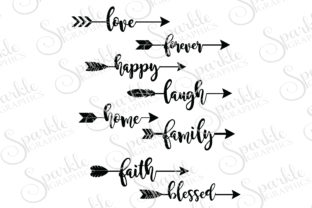
Arrow Words Cut File: A Designer's Review
When I first opened the folder for the Arrow Words Cut File, my immediate reaction wasn't about the file formats or compatibility lists. It was about the mood. As a designer who spends hours evaluating digital assets for real-world production, I look for that specific spark—a design that feels ready to be stitched, not just viewed on a screen. This piece carries a distinct energy of direction and movement. The arrow motif combined with the wordplay suggests a narrative, making it far more than a simple graphic element. It feels like a statement waiting to happen on fabric.
The visual personality here is clean yet dynamic. In the world of machine embroidery design, clarity is king. If a design looks cluttered in its vector form, it will likely collapse under the tension of thread and stabilizer. My initial assessment is that this design has strong structural integrity. The lines appear sharp enough to hold their shape during stitching, which is crucial for maintaining legibility in any embroidery project. It strikes a balance between decorative flair and functional typography, a sweet spot that often makes or breaks a product's success in a boutique setting.
From Screen to Stitch: Real-World Application
I recently put this Arrow Words Cut File through a practical test scenario to see how it would perform outside the virtual realm. The goal was to create a custom embroidered tote bag for a local artisan market stall. The concept was simple: a sturdy canvas bag featuring the design prominently, intended as a branded item for crafters selling handmade goods. The challenge with arrows and text is that they often demand precision; if the spacing is off or the stitch density is too high, the letters can blur together, ruining the message.
In this context, the design excelled. The layout allowed for a generous amount of negative space around the text, which is vital for preventing the fabric from puckering. When I transferred the vector into my embroidery software, the conversion to satin stitches felt natural. The curves of the arrow didn't require excessive trimming, and the straight lines held up well against the tension of the bobbin thread. For an Etsy seller or a small shop owner, this kind of reliability is everything. You want your finished product to look professional enough that a customer doesn't question the quality of the stitching immediately upon seeing it.
The versatility of this asset extends beyond tote bags. Imagine applying this to a sweatshirt for a holiday gift collection. The directional nature of the arrow draws the eye, creating a focal point on a chest pocket or centered on the back of a hoodie. It works equally well for baby items, where the softness of the surrounding fabric contrasts nicely with the structured look of the stitched words. Whether you are producing custom apparel or creating personalized gifts, the design adapts to the medium without losing its character.
Navigating Fabric and Hoop Constraints
However, no design is without its limitations, and as a reviewer, it is my duty to highlight where caution is required. While the Arrow Words Cut File is robust, it demands respect when applied to certain materials. If you plan to use this on a curved surface like a baseball cap, you must consider the distortion that occurs when flat vectors are mapped onto a rounded hoop. The arrow might stretch slightly at the tip, altering the intended geometry. For these applications, I recommend testing on a scrap piece of the actual hat material first to ensure the curvature doesn't compromise the lettering.
Texture is another factor that cannot be ignored. On thick, textured fabrics like heavy wool or bouclé, the fine details of the design might get lost. The thread could sink into the fibers, making the arrow look less defined. Similarly, on thin or stretchy knits, the stability of the design relies heavily on the quality of your stabilizer. Without adequate backing, the tension of the stitches could pull the fabric out of shape, turning a crisp design into a distorted mess. Always confirm that your hoop size accommodates the full width of the design without cutting off critical elements.
Dense stitch areas are also worth noting. If the design includes fill stitches within the arrow or the text, check the density settings in your software. Too much thread in one area can lead to stiffness, which is particularly problematic for items like aprons or pillow covers that need to drape or fold comfortably. Conversely, if the design is too sparse, it might look insubstantial on dark fabrics where contrast is key. Evaluating the thread colors against your chosen fabric is a non-negotiable step before running a commercial batch.
Visual Appeal and Brand Consistency
For those building a brand identity, the aesthetic consistency of your designs matters immensely. The Arrow Words Cut File offers a modern, minimalist vibe that fits seamlessly into contemporary branding. It conveys a sense of purpose and forward momentum, which resonates well with audiences looking for motivation or lifestyle products. When used in commercial embroidery, this design elevates the perceived value of the item. A well-executed arrow motif suggests attention to detail, fostering trust with buyers who are paying a premium for handmade quality.
The design also plays a significant role in giftability. Personalized items are often purchased for special occasions, and the visual impact needs to be immediate. The clear lines and bold shapes of this file ensure that the message is readable even from a distance, whether it is displayed at a craft fair or worn by a recipient. This visibility enhances the emotional connection between the maker and the user, a subtle but powerful driver for repeat business.
Practical Notes for the Design Professional
Before integrating this digital embroidery file into your production line, there are several technical checks you should perform. First and foremost, always test the design on scrap fabric using the same thread and stabilizer combination you intend for the final product. This step reveals potential issues with thread breakage, fabric puckering, or color bleeding that cannot be predicted from a mockup alone.
Review the stitch density carefully. If the file contains a mix of satin stitch, fill stitch, and running stitch, ensure that the transitions are smooth. Abrupt changes in stitch direction can cause the needle to hit the same spot repeatedly, leading to thread jams. Additionally, inspect the small details. Sometimes, scaling a design down for a smaller hoop size can make tiny corners disappear or merge. Check your work in black and white mockups to verify that the contrast remains effective regardless of the color palette.
Licensing is another critical component for anyone selling finished goods. While the Zip File Folder Contents indicate that you receive SVG, DXF, EPS, and PNG files compatible with major cutting machines, the license terms for embroidery usage may differ. Ensure you have the right to sell physical items created with this design. Do not assume that a cut file license automatically grants commercial rights for machine embroidery unless explicitly stated.
Finally, consider the longevity of the product. Items that undergo frequent washing, such as kitchen towels or baby clothes, require durable stitching. Verify that the design does not rely on overly delicate threads that might fray over time. By taking these precautions, you protect your reputation as a creator and ensure that every handmade product leaving your studio meets the highest standards of quality.
The Arrow Words Cut File stands out as a versatile tool in the arsenal of a creative entrepreneur. It bridges the gap between digital convenience and tangible craftsmanship, offering a reliable foundation for a wide range of projects. Whether you are designing for a niche market or expanding your general inventory, this asset provides the visual punch needed to capture attention while maintaining the structural integrity required for professional results.